
GPT-6 Astra decodes a WWI German radiogram
Translated by a model; the original is in Russian.
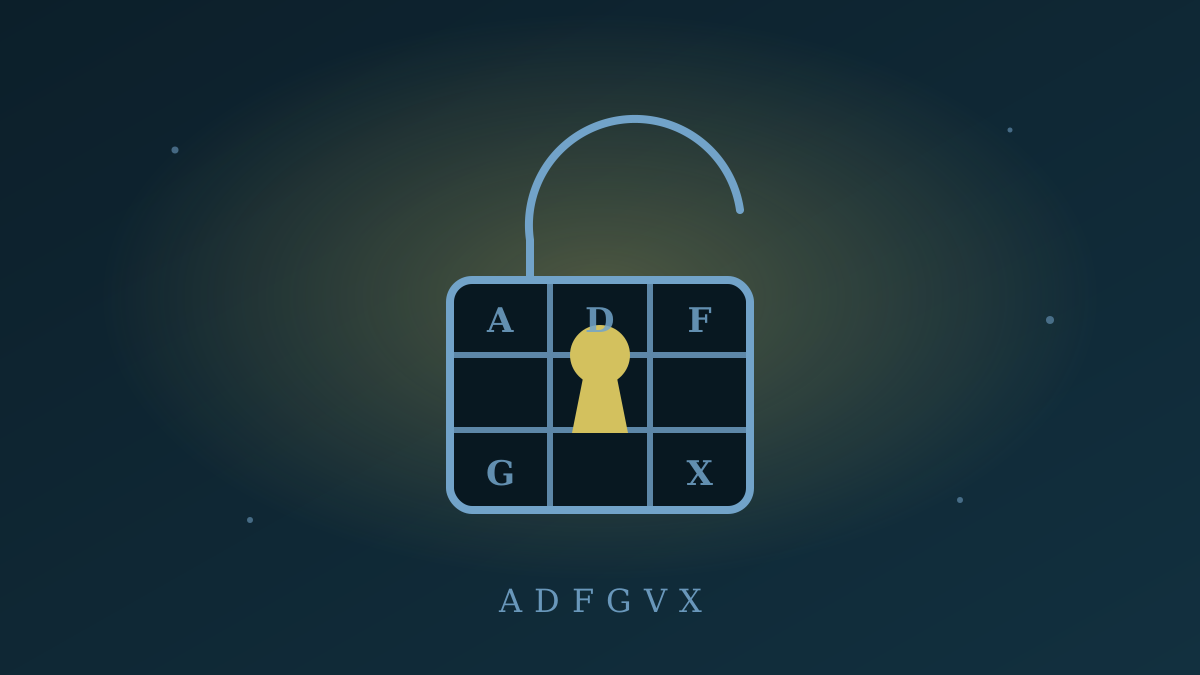
The German science-and-blogging portal Scienceblogs.de maintains a well-known list of 50 unsolved ciphers — everything from messages left by serial killers to the legendary Voynich manuscript. Among them is a set of German radiograms from the First World War, encrypted with the ADFGVX method. Hundreds of such messages have already been decoded (including by cryptanalysis specialist George Lasry), but around a dozen have resisted all attempts. One of them — transmitted on 27 November 1918 — has now, according to the post's author, been read by the GPT-6 Astra model.
How the cipher works
ADFGVX uses a 6×6 square whose rows and columns are labelled with the letters A, D, F, G, V, X, with letters and digits placed in the cells. Each character of the plaintext is replaced by a pair of these six letters, after which the result is subjected to a columnar transposition based on a keyword. The specific table depends entirely on the key, so without it, working out the layout is extremely difficult.
What the model found
Astra identified the keyword «TRUPPENVERSCHIEBUNG» (described in the pages of J. Rives Childs' textbook on German military ciphers of 1914–1918). After transposing the columns and reversing the substitution, out came a message stating that an English cruiser had arrived in Sevastopol, and that an Allied squadron was to follow it in on the 26th.
There is an intriguing hypothesis as to why the radiogram held out for so long. According to the author, the Germans only began using the key «TRUPPENVERSCHIEBUNG» from 9 December 1918, whereas the message itself was sent earlier — on 27 November. The reason for this discrepancy remains unknown: it may be precisely why the cipher could never be matched to the correct key.
Self-verification against the archives
The most striking part of the story is that the model did not stop at the decryption. Astra cross-checked the result against historical sources and found that the English cruiser HMS Canterbury did indeed arrive in Sevastopol on 24 November 1918 according to the ship's logs, and that the Allied squadron came in two days later. This matches the content of the radiogram, including the partially damaged date.
The author stresses that he has come across no mention of an earlier decryption of this particular message, and shares the result as a small but telling example of the model's capabilities. Fully verifying the claim is difficult for a reader to do, but the very line of reasoning — from guessing the key to comparing it against the ships' logs — looks like a vivid illustration of where modern systems are heading: not merely to produce an answer, but to try to justify it as well.
Source: Hacker News
Comments
Sign in, to comment.