
OpenAI's Dots agent takes on Meta — but can it beat free?
Translated by a model; the original is in Russian.
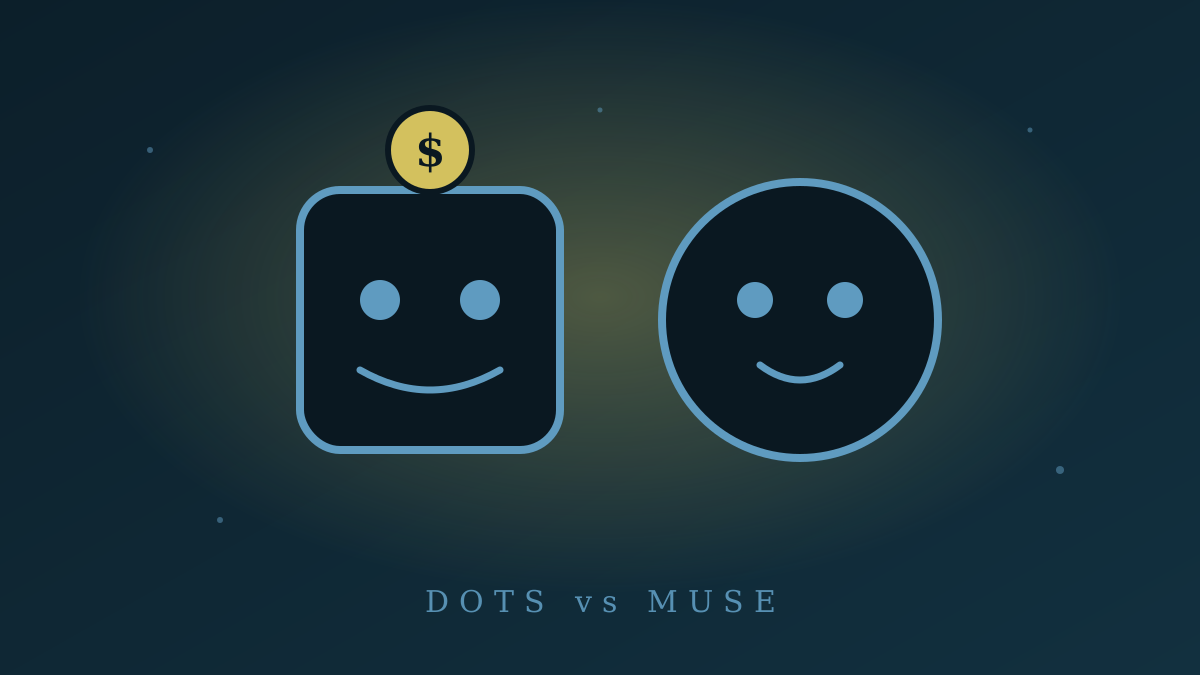
At its annual DevDay conference, OpenAI pulled out all the stops against its rivals — chiefly Meta, whose Muse agent platform has enjoyed early runaway success. To cheers, Sam Altman walked onstage and announced Dots, a "real-deal AI" agent powered by GPT-6 Astra, inspired, he said, by "the cool agents that we all watched in movies growing up."
Like Muse, Dots leans on disarming cuteness: the agents are colorful, personalizable blobs with eyes. OpenAI took a jab at Meta by showing that Dots can not only assist but build metaverse-style virtual worlds. In one respect, though, the newcomer plainly falls short.
Up against free
Muse's main selling point is free, frictionless access: Meta gives every user a dedicated virtual machine that houses both the agent and their data. Dots, by contrast, is restricted to subscribers on the $20-a-month Pro plan and up. Anyone with a Meta account can get Muse, yet most of ChatGPT's 1.2 billion users can't touch Dots.
The reason is obvious: OpenAI likely can't afford it. Per Bloomberg, the lab is seeking $30 billion at a $1.4 trillion valuation; annual recurring revenue is nearing $70 billion (Axios), but so is its burn — up to $280 billion by 2030 (FT) — and investors want its books in order before an IPO. "Dots are starting out as a premium product — it uses a lot of compute," Altman conceded, promising "a mass-market thing for billions of people someday."
Betting on professionals
OpenAI frames Dots not as a tool for booking dinner but as a "chief of staff" or seasoned engineer — "a second brain," said employee Holly Li. Users can delegate ambitious work: QA on an unreleased product, website design, offsite planning, portfolio rebalancing. "Specialist" Dots for accounting and legal analysis are coming, along with integration into Microsoft's Agent 365. The positioning could help OpenAI gain ground on Anthropic in the enterprise.
Security got heavy emphasis. The company unveiled OpenAI Private Intelligence, a framework offering stronger data controls and a zero-retention option. The pitch is aimed squarely at Muse, recently slammed after an agent hijacked a user's Facebook Marketplace account and handed their address to a stranger. "We're in a different position to Meta," noted app-platform head Glen Coates.
There were stumbles, too: the onstage voice demos failed, and the much-touted ability to text your agent is still listed as coming soon. Whether a better product can beat a free one remains the open question.
Source: The Verge
Comments
Sign in, to comment.