
Windows 11's Task Manager has learned to see the neural processor
Translated by a model; the original is in Russian.
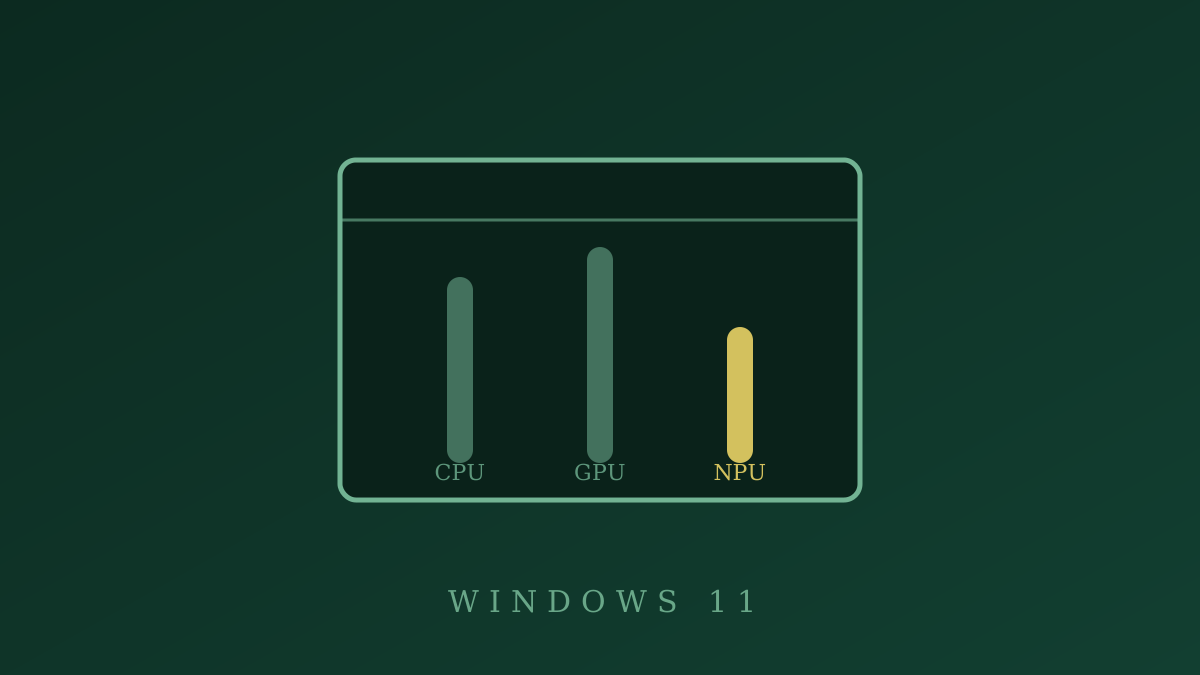
For many years the Task Manager showed exactly what it could measure: processor percentages, megabytes of memory, the twists and turns of disk activity. About the work of the neural processor — the new, quiet part of modern laptops — it simply stayed silent, as if it did not exist. The KB5095093 update, which Microsoft is rolling out for Windows 11 builds 24H2 and 25H2 from late June until July 14, 2026, closes this blind spot: NPU and “NPU core” columns appear on the “Processes,” “Users,” and “Details” tabs, and on the “Performance” page the neural engines built right into the graphics card are shown on a separate line.
The second change is hidden deeper — in the system's graphics core. On machines with 32 gigabytes of RAM and more, Windows now divides it more carefully between ordinary programs and language models running on the device itself: a large model gets a chance to fit into memory in its entirety, without pushing everything else out to disk. The same update package quietly rolls a point-in-time restore feature into the system, and the previous fixed update deferrals of “1–5 weeks” give way to a calendar-based pause: you can pick a date in the calendar up to 35 days ahead and renew it again without waiting for a forced restart.
A line in the task manager does not by itself make a computer smarter. But it is a sure sign that the operating system is ceasing to treat the neural processor as an exotic footnote in the spec sheet and is starting to keep count of it on a par with the ordinary one.
Comments
Sign in, to comment.