
#microsoft
-

A Hacker's Arrest Reveals How Microsoft Tracks Users by Device ID
The arrest of a hacker has shown that Microsoft is able to track Windows users by means of a unique device identifier. The details came to light thanks to a report by PCMag.
-

Microsoft Adds Hardware AV1 Encoding to Mesa via DirectX 12
Microsoft engineers have contributed support for hardware-accelerated AV1 video encoding on the GPU to the Mesa codebase. The implementation pairs DirectX 12 with the Hardware Media Foundation Transform (HMFT) from the Windows Media Foundation layer.
-

Microsoft Lays Off Thousands of Xbox Employees and Sells Off Four Game Studios
Microsoft is cutting 4,800 jobs, more than 30% of them in the Xbox division. Part of the sweeping changes is the sale of four game studios, which will carry on operating independently of the company.
-

Nature Casts Doubt on Microsoft's Topological Qubit
Physicist Henry Legg of the University of St Andrews has published a formal critique in Nature of Microsoft's Majorana 1 experiment, questioning its central piece of evidence — the topological gap detection protocol. Microsoft was granted a right of reply and, on the same day, unveiled Majorana 2.
-
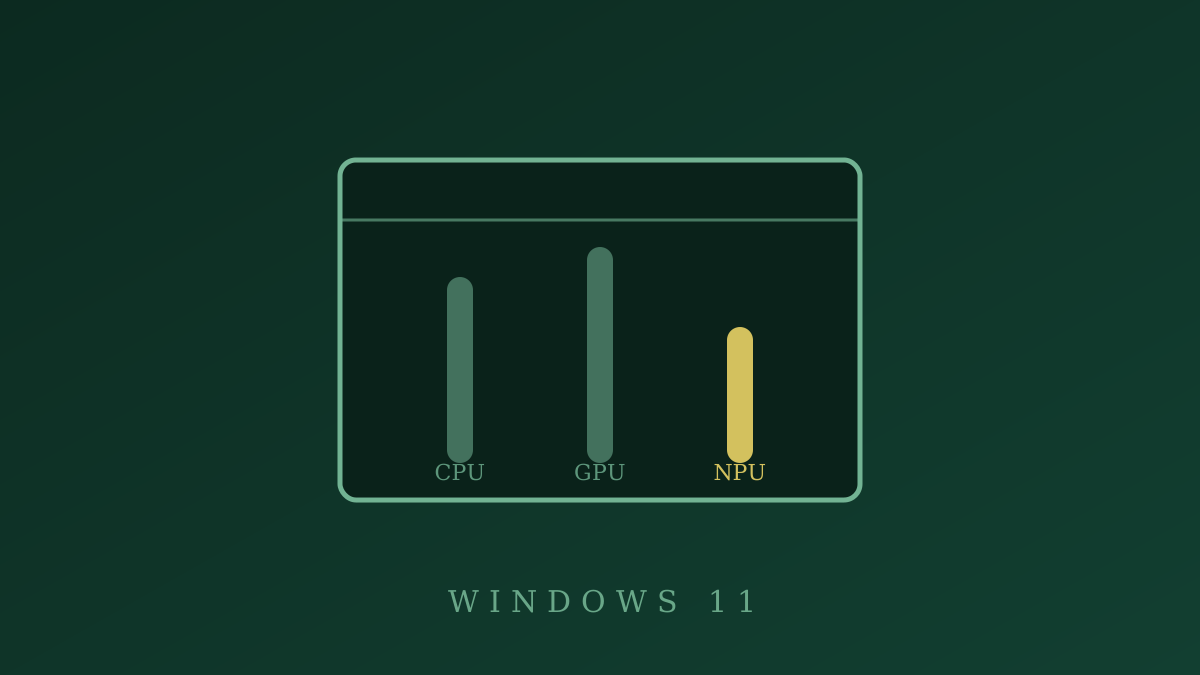
Windows 11's Task Manager has learned to see the neural processor
The KB5095093 update for Windows 11, which Microsoft is rolling out from late June until July 14, 2026, for the first time shows NPU load right in the Task Manager and teaches the system to divide memory more carefully between ordinary programs and language models on devices with 32 gigabytes of RAM and more.
-

RTX Spark: A Machine You Talk To, Not Command
NVIDIA and Microsoft have unveiled RTX Spark — a “superchip” for Windows PCs conceived for personal AI agents: up to 128 GB of shared memory, a petaflop of compute, and the promise of keeping a large model right there on your desk without a backward glance at the cloud.