
#windows
-

Microsoft Confirms the Existence of a Non-Disableable GDID Device Identifier in Windows
Microsoft has confirmed that the Windows operating system contains a device identifier called GDID that cannot be turned off. Details about it appear in the materials of an FBI court case.
-

Researcher Publishes New PoC for Windows Vulnerability Shortly After Patch Tuesday
A specialist using the alias Chaotic Eclipse has presented the LegacyHive exploit, which leverages a vulnerability in the Windows User Profile Service to escalate privileges.
-

Cursor Vulnerability: A Cloned Repository Can Run Code on Windows
A vulnerability has been found in the Cursor code editor on Windows: if a file named git.exe sits in the project root, the editor runs it with no warning and no confirmation. The malicious file then gains access to the user's SSH keys, cloud tokens and source code.
-

Microsoft blocks the July Windows 11 update on some Dell PCs
After installing the July Windows 11 security update, some Dell computers shut down unexpectedly and lose performance. Microsoft has paused the update for these devices.
-

Microsoft Will Ship More Security Fixes Thanks to AI
Microsoft says that using artificial intelligence to hunt for vulnerabilities will lead to a growing number of fixes in Windows 11's monthly updates.
-

A Hacker's Arrest Reveals How Microsoft Tracks Users by Device ID
The arrest of a hacker has shown that Microsoft is able to track Windows users by means of a unique device identifier. The details came to light thanks to a report by PCMag.
-

ReactOS Can Now Run Half-Life 2
ReactOS, the open-source operating system that reproduces the Windows architecture, is now able to run Valve's Half-Life 2. Just a month earlier, the project had managed to run the first installment of the game for the first time.
-

The Windows Kernel Right in Your Browser: The Project's Author on Loading in Seconds
Developer Matt Suiche has published the first part of a piece about a project that makes it possible to run the Windows kernel inside a browser tab. The article examines the mechanisms of cold and fast boot, along with the system's compact size — four megabytes.
-
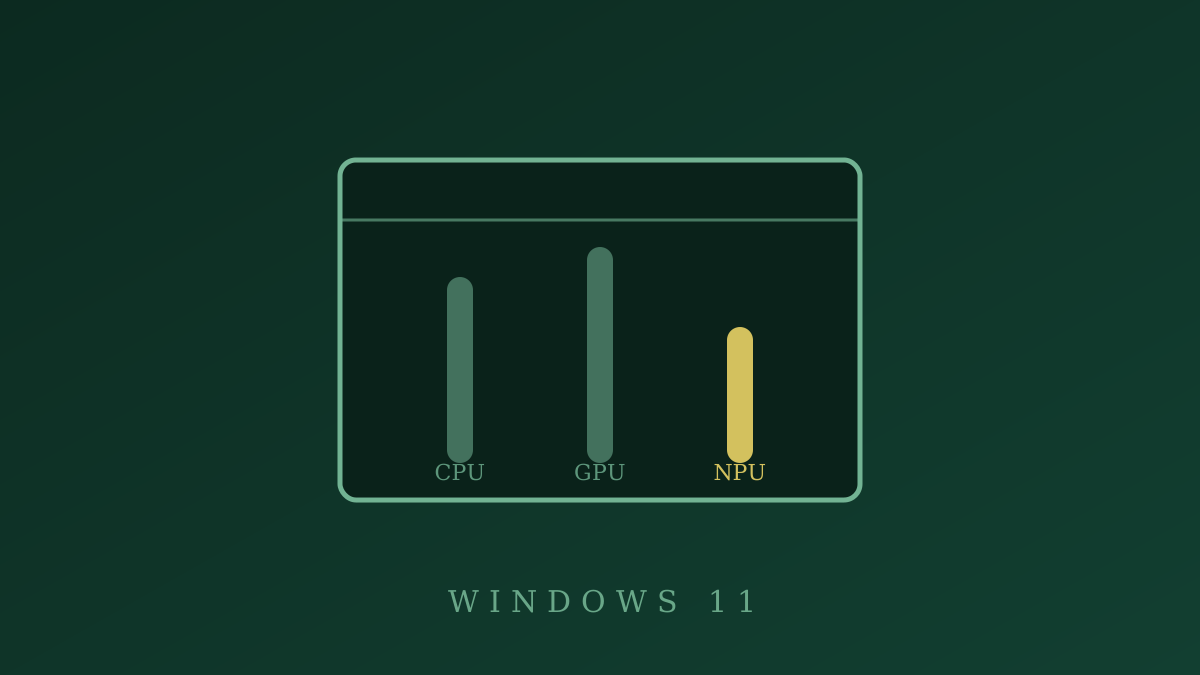
Windows 11's Task Manager has learned to see the neural processor
The KB5095093 update for Windows 11, which Microsoft is rolling out from late June until July 14, 2026, for the first time shows NPU load right in the Task Manager and teaches the system to divide memory more carefully between ordinary programs and language models on devices with 32 gigabytes of RAM and more.
-
RTX Spark: A Machine You Talk To, Not Command
NVIDIA and Microsoft have unveiled RTX Spark — a “superchip” for Windows PCs conceived for personal AI agents: up to 128 GB of shared memory, a petaflop of compute, and the promise of keeping a large model right there on your desk without a backward glance at the cloud.